

Choosing between an induction and gas range is one of the most important decisions when designing or upgrading your kitchen. Both technologies offer distinct advantages, and the right choice depends on your cooking style, kitchen design, and long-term goals.
At Howard Payne Company, homeowners can explore premium brands like Wolf, Viking, Miele, Bosch, and GE—all offering high-performance options in both gas and induction cooking.
This guide breaks down everything you need to know to make a confident, informed decision.
What Is a Gas Range?
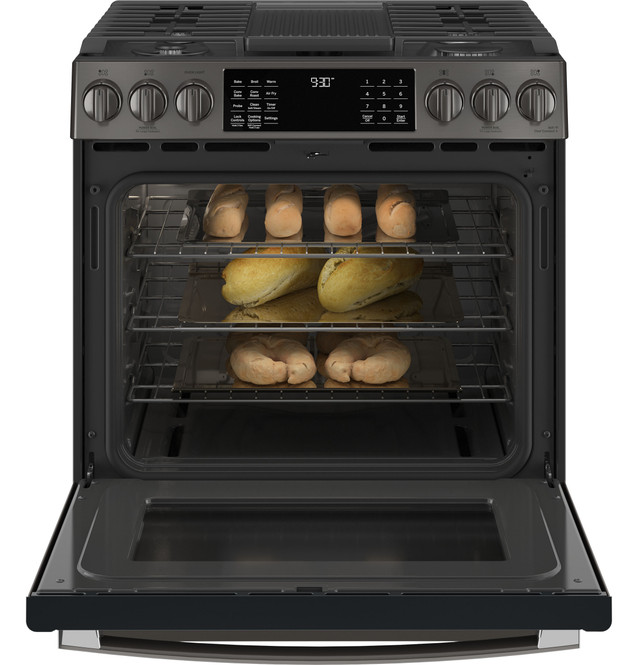
A gas range uses an open flame powered by natural gas or propane to heat cookware directly. It has long been the preferred choice of professional chefs and serious home cooks.
Key Benefits of Gas Ranges
- Instant heat control: Adjust flame levels in real time
- Visual feedback: You can see the flame intensity
- Works with all cookware: No compatibility issues
- High heat output: Ideal for searing, wok cooking, and charring
Premium brands like Wolf and Viking are especially known for their powerful gas ranges with precise temperature control.
Potential Drawbacks
- Less energy-efficient than induction
- Harder to clean (grates, burners)
- Requires proper ventilation
What Is an Induction Range?
Induction ranges use electromagnetic energy to directly heat cookware rather than the cooktop surface. This results in faster, more efficient cooking.
Key Benefits of Induction Ranges
- Ultra-fast heating: Boils water significantly faster than gas
- Energy efficiency: Minimal heat loss
- Safety: Surface stays relatively cool
- Easy cleaning: Smooth glass surface
Luxury brands like Miele, Bosch, and GE lead the way in advanced induction technology with sleek, modern designs.
Potential Drawbacks
- Requires magnetic cookware (stainless steel or cast iron)
- Higher upfront cost
- Learning curve for users accustomed to gas
Induction vs. Gas: Side-by-Side Comparison
Feature | Induction Range | Gas Range |
| Heat Speed | Extremely fast | Fast |
| Temperature Control | Precise, digital | Instant, manual |
| Energy Efficiency | High | Moderate |
| Safety | Very safe (cool surface) | Open flame risk |
| Cleaning | Easy (flat surface) | More involved |
| Cookware Compatibility | Limited | Universal |
| Installation | Electrical | Gas line required |
Performance: Which Cooks Better?
If performance is your top priority, both options excel but in different ways.
- Gas ranges offer unmatched responsiveness and are ideal for techniques like flambéing, stir-frying, and charring.
- Induction ranges provide precise, consistent heat—perfect for simmering, melting chocolate, or delicate sauces.
Verdict:
- Choose gas for traditional, hands-on cooking
- Choose induction for precision and consistency
Cleaning & Maintenance
Induction ranges clearly win when it comes to cleaning.
- Induction: Wipe clean in seconds, no burners or grates
- Gas: Requires cleaning around burners, grates, and crevices
For busy households or design-focused kitchens, induction offers a major convenience advantage.
Safety Considerations
Safety is a growing concern for modern homeowners.
- Induction ranges automatically shut off when cookware is removed and stay cool to the touch
- Gas ranges involve open flames and require careful monitoring
Families with children often prefer induction for peace of mind.
Design & Kitchen Aesthetics
Induction ranges are a favorite in modern, luxury kitchens due to their sleek, minimalist look. They integrate seamlessly with contemporary cabinetry and countertops.
Gas ranges, especially from brands like Wolf, make a bold statement and are often a focal point in professional-style kitchens.
Cost Considerations
Upfront Costs
- Induction ranges: Higher initial investment
- Gas ranges: Typically more affordable
Long-Term Costs
- Induction: Lower energy bills
- Gas: Slightly higher operating costs
Over time, induction may offer better efficiency savings.
Which One Is Right for You?
Choose an Induction Range If You:
- Want modern design and easy cleaning
- Prioritize energy efficiency and safety
- Prefer precise, controlled cooking
Choose a Gas Range If You:
- Love traditional cooking techniques
- Want instant flame control
- Already have a gas line installed
Explore Premium Options at Howard Payne
At Howard Payne Company, you’ll find a curated selection of the industry’s top appliance brands:
- Professional-grade gas ranges from Wolf and Viking
- Innovative induction ranges from Miele, Bosch, and GE
Whether you’re remodeling your kitchen or upgrading a single appliance, expert guidance makes all the difference.
Ready to Upgrade Your Kitchen?
Visit Our Showroom to see induction and gas ranges in action
Schedule a Consultation with our appliance specialists
Experience the performance, design, and innovation firsthand and find the perfect fit for your home.
Induction vs. Gas FAQs
1. Is induction more precise and faster than gas?
Yes. Induction is significantly faster, as it uses electromagnetism to heat the cookware directly, bypassing the air. It can boil water in nearly half the time of gas. Regarding precision, induction offers granular control—especially at ultra-low temperatures—making it superior for delicate tasks like melting chocolate or simmering sauces without a double boiler.
2. Why do professional chefs prefer gas over induction (or vice versa)?
Chefs traditionally prefer gas for “active” cooking—tossing pans, charring peppers over an open flame, and the visual feedback of the fire. However, many modern chefs are switching to induction for the cooler kitchen environment, the extreme speed, and the pinpoint consistency that gas simply cannot match.
3. Are induction ranges more expensive to purchase and install?
Generally, yes. The upfront cost for a premium induction range (like Wolf or Miele) is often higher than a comparable gas model. Additionally, if you are switching from gas to electric, you may need a dedicated 240V/40-50 amp circuit, which adds to the initial installation cost.
4. Is it cheaper to run a gas stove or an induction cooktop?
While gas is often cheaper as a raw fuel source, induction is significantly more efficient. About 90% of the energy used in induction goes directly into the food, compared to roughly 40% with gas. For most homeowners, the difference in the monthly utility bill is negligible, but induction is the “greener” choice.
5. Can I use my existing cookware, like cast iron, on induction?
You can use any cookware that is ferrous (magnetic). Cast iron and most stainless steel work beautifully. However, copper, aluminum, and glass will not work unless they have a specialized magnetic base. A quick test: if a kitchen magnet sticks to the bottom of your pan, it’s induction-ready.
6. Are induction cooktops safer for homes with children?
Induction is the clear winner for safety. Because the surface itself doesn’t get hot (only the pan does), the risk of accidental burns is nearly eliminated. Most units also feature “auto-off” sensors that cut power the moment a pan is removed, and there are no open flames or risks of gas leaks.
7. Is cooking with gas bad for indoor air quality?
Recent studies suggest that gas stoves can emit nitrogen dioxide ($NO_2$) and carbon monoxide, which can impact indoor air quality if not properly ventilated. Induction produces zero combustion byproducts, making it a favorite for “Green Homes” and those concerned with respiratory health.
8. Are induction cooktops actually easier to clean?
Significantly. Because the glass surface stays relatively cool, spilled food doesn’t “bake” onto the cooktop. You can typically wipe away a mess immediately with a damp cloth. Gas ranges require removing heavy grates and cleaning around burners where grease and carbon tend to build up.
9. Can induction cooktops scratch or crack easily?
While the ceramic glass is incredibly durable, it can scratch if heavy pans (like cast iron) are slid roughly across the surface. It can also crack if a heavy object is dropped directly on it. With “white-glove” care and proper lifting, however, a high-end induction top will stay pristine for years.
10. Do induction ranges increase home value?
In the current luxury market, yes. As more municipalities move toward electrification and “smart home” trends grow, induction is increasingly seen as a high-tech, premium upgrade. A kitchen featuring Sub-Zero/Wolf induction is a major selling point for modern, design-forward buyers.