

A high-output range can transform the way we cook, but its performance also creates greater ventilation demands. Matching a ventilation system to a high-output range requires more than choosing a hood based on appearance or width. We need to consider the range’s cooking surface, heat output, fuel type, cooking habits, hood configuration, blower capacity, ductwork, and kitchen layout.
For luxury kitchens, manufacturers such as Thermador, Wolf, Viking, Miele, Monogram, and KitchenAid offer sophisticated cooking and ventilation solutions available through Howard Payne Company. Howard Payne’s product lineup includes these leading appliance brands, allowing homeowners to coordinate premium cooking appliances with an appropriately designed kitchen package.
The right ventilation system helps remove heat, smoke, grease, steam, odors, and combustion byproducts, while supporting a more comfortable and enjoyable kitchen environment.
Why High-Output Ranges Require More Powerful Ventilation
Professional-style and high-output ranges are designed to deliver substantially more cooking power than conventional residential ranges. Multiple burners may operate simultaneously, and large cooking surfaces can generate significant amounts of heat and airborne contaminants.
When we pair a powerful range with inadequate ventilation, several problems can occur.
Cooking odors may linger throughout the home. Heat can accumulate around the cooking area. Grease particles can settle on cabinetry and surrounding surfaces. Steam and moisture may migrate into other rooms. With gas cooking, combustion products also make proper ventilation particularly important.
A ventilation system should therefore be considered part of the cooking appliance package, rather than an accessory selected after the range and cabinetry have already been specified.
This is particularly important when designing a luxury kitchen around a large professional range or rangetop.
Start with the Range, Not the Hood
One of the most common mistakes we see in kitchen planning is selecting the range hood based primarily on aesthetics.
Instead, we recommend starting with the cooking appliance.
The range determines the ventilation requirements. We then evaluate the hood, blower, ducting, and installation requirements around that appliance.
For example, a compact cooking surface may have very different ventilation requirements from a 48-inch professional range with multiple high-output burners. A homeowner who regularly sears steaks, boils large pots, uses griddles, or cooks with several burners simultaneously may also need a different ventilation strategy from someone whose cooking habits are lighter.
Howard Payne’s product portfolio includes Thermador, Wolf, Viking, Miele, Monogram, KitchenAid, and Sub-Zero, giving homeowners access to premium appliance solutions from several leading manufacturers.
Understand BTU Output When Sizing Ventilation
BTU output is one of the most important considerations when matching a ventilation system with a gas range.
A range with several high-output burners can produce significantly more heat than a standard residential cooking appliance. The greater the potential heat output, the more carefully we need to evaluate the ventilation system.
However, BTU output should not be considered in isolation.
We also need to consider:
- Range width
- Number of burners
- Burner output
- Griddle or grill components
- Cooking frequency
- Cooking techniques
- Hood width
- Hood depth
- Hood mounting height
- Duct size and configuration
- Blower capacity
- Kitchen size
- Makeup-air requirements
- Local building requirements
Manufacturer specifications should ultimately guide the final ventilation selection.
Choose a Hood That Properly Captures Cooking Effluent
A ventilation hood needs to capture the air rising from the cooking surface before heat, smoke, grease, and steam can spread throughout the kitchen.
For that reason, hood dimensions matter.
A hood that is too narrow may not adequately capture cooking effluent from the outer burners. We generally want the ventilation system to provide appropriate coverage for the cooking surface rather than simply matching the range width visually.
Hood depth can also affect capture performance. A shallow hood may not provide the same level of coverage as a properly sized deeper hood, particularly when cooking on front burners.
The hood configuration should therefore be coordinated with the range, surrounding cabinetry, ceiling height, and overall kitchen design.
Thermador Ventilation for High-Output Cooking
Thermador is one of the premium brands available through Howard Payne Company, and its product lineup includes high-performance ventilation systems alongside professional ranges, rangetops, cooktops, wall ovens, and other luxury kitchen appliances.
Thermador’s ventilation options include wall hoods, island hoods, custom inserts, downdrafts, and different blower configurations. Howard Payne’s published Thermador materials also identify multiple hood and blower configurations, including remote, integrated, and inline blower options.
This flexibility is particularly useful when we are designing a kitchen around a high-output Thermador range.
For example, a homeowner might select a 36-, 48-, or 60-inch professional range and then coordinate the appropriate ventilation system and blower based on the manufacturer’s specifications and the kitchen’s installation conditions.
The important point is that the hood and blower should be treated as a complete ventilation system rather than independent products.
Miele Ventilation for a Refined Luxury Kitchen
Miele is another premium appliance brand available through Howard Payne Company. Its kitchen lineup includes rangetops and ventilation hoods, as well as ovens, cooktops, dishwashers, refrigeration, coffee systems, and other kitchen appliances.
Miele ventilation can be particularly appealing when homeowners want strong kitchen performance without compromising a refined visual design.
When selecting a Miele ventilation solution, we should consider the relationship between the hood and the cooking surface, the kitchen’s cabinetry, the available duct route, and the homeowner’s cooking habits.
This approach allows ventilation to become an integrated component of the kitchen rather than an afterthought.
Wolf Ventilation and Professional-Style Cooking
Wolf is another important option for homeowners creating a high-performance kitchen. Howard Payne Company is a Sub-Zero & Wolf Living Kitchen Dealer, a designation the company has held since 2014.
Wolf cooking appliances are frequently considered for kitchens where high-performance cooking is a priority. When selecting a Wolf range or rangetop, ventilation should be planned at the same stage as the cooking appliance.
This is especially important for large cooking surfaces and professional-style configurations.
A properly coordinated Wolf cooking and ventilation package can help create a kitchen that performs as well as it looks.
Viking Ventilation for High-Output Ranges
Viking is also part of Howard Payne Company’s premium appliance lineup.
For homeowners selecting a Viking professional-style range, ventilation should be sized and configured according to the specific appliance’s requirements.
We recommend considering the entire system:
Viking range → hood → blower → ductwork → exterior termination → makeup air, when required.
This approach is more reliable than purchasing a hood independently and attempting to determine compatibility later.
How Ductwork Affects Ventilation Performance
A powerful blower cannot compensate for poorly designed ductwork.
The duct system needs to move air efficiently from the hood to the exterior. Long duct runs, excessive bends, restrictive transitions, undersized ducting, and improper installation can reduce ventilation performance.
This is why we recommend addressing ductwork before cabinetry and appliances are finalized.
During a kitchen renovation or new construction project, the appliance dealer, kitchen designer, contractor, architect, and HVAC professional may need to coordinate their plans.
Howard Payne Company specifically provides appliance specifications and dimensions to help customers prepare for installation, and the company notes that on-site visits can be arranged when requested to inspect a project before installation.
That type of coordination can help identify installation challenges before they become expensive changes during construction.
Don’t Ignore Makeup Air
A powerful ventilation system removes a substantial volume of air from the kitchen.
That air has to be replaced.
In tightly sealed homes, this can make makeup air an important part of the ventilation discussion. Depending on the ventilation system and local requirements, additional provisions may be necessary to replace exhausted air.
Makeup-air requirements can vary according to the home, ventilation system, local codes, and installation conditions. We therefore recommend having the appropriate qualified professionals evaluate the project rather than assuming that one ventilation configuration applies to every kitchen.
This consideration becomes increasingly important as ventilation capacity increases.
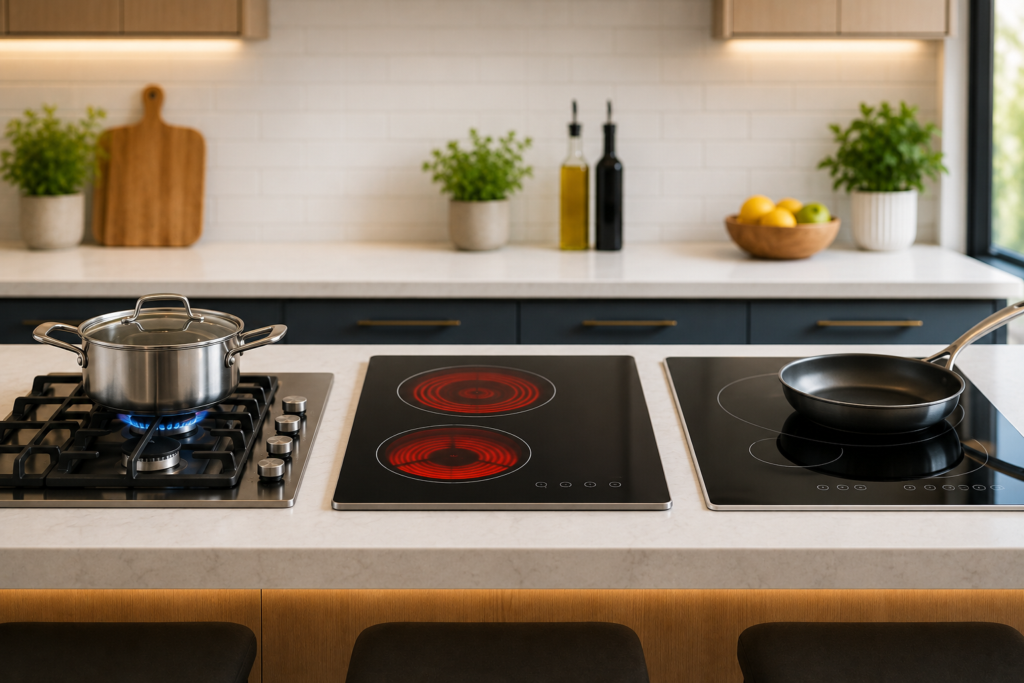
Gas Ranges, Induction, and Ventilation Requirements
Fuel type can influence the ventilation conversation.
Gas cooking produces combustion byproducts in addition to the heat, steam, smoke, and grease generated by cooking. High-output gas ranges therefore deserve careful ventilation planning.
Induction cooking does not produce combustion gases, but it still produces steam, grease, smoke, odors, and heat from the cooking process.
Consequently, induction does not eliminate the need for effective kitchen ventilation.
The right solution depends on the specific cooking appliance and the homeowner’s cooking habits.
Match Ventilation to How We Actually Cook
There is no single ventilation solution that is ideal for every homeowner.
We should ask practical questions:
- Do we regularly use multiple burners at once?
- Do we sear steaks at high temperatures?
- Do we frequently fry foods?
- Do we use a griddle?
- Do we cook large quantities of food?
- Do we entertain frequently?
- Do we use the oven for extended periods?
- Do we prefer an open-concept kitchen?
- Is the range positioned against a wall or on an island?
Someone who regularly cooks restaurant-style meals may have substantially different ventilation needs than someone who primarily prepares simple meals.
Cooking behavior is therefore an important part of ventilation selection.
Wall Hoods vs. Island Hoods
The location of the cooking appliance affects hood selection.
Wall-Mounted Range Hoods
A wall-mounted hood is installed against a wall and can provide an effective solution when the range is positioned along the kitchen perimeter.
It can also integrate naturally with surrounding cabinetry or become a prominent architectural feature.
Island Range Hoods
Island cooking stations require a different approach because the ventilation system is exposed to the kitchen from multiple directions.
Capture performance becomes particularly important because air movement around an island can affect how effectively cooking effluent reaches the hood.
For homeowners planning an island range, we recommend selecting the cooking appliance and ventilation system together during the kitchen design process.
Consider Noise Alongside Ventilation Power
Maximum blower capacity is not the only consideration.
Noise can have a meaningful impact on how comfortable the kitchen feels.
In an open-concept home, excessive ventilation noise can affect conversations, entertaining, television viewing, and everyday family activities.
This is one reason we should evaluate blower location and configuration as part of the design.
Depending on the manufacturer’s available options and project requirements, remote or inline blower configurations may provide additional design flexibility. Thermador’s published ventilation materials, for example, identify remote, integrated, and inline blower options.
The best solution balances ventilation performance with the overall experience of using the kitchen.
Coordinate Ventilation Before Installation
Ventilation should be planned early—not after the cabinets have been ordered.
Before installation, we should confirm:
- The exact range or rangetop model
- Required hood dimensions
- Recommended blower capacity
- Duct diameter
- Duct route
- Electrical requirements
- Exterior termination requirements
- Makeup-air considerations
- Cabinet clearances
- Installation specifications
Howard Payne Company emphasizes the importance of using the specifications and dimensions associated with selected appliances and recommends addressing questions or potential corrections before the scheduled installation date.
This planning process is particularly valuable for luxury kitchens where custom cabinetry, stonework, architectural details, and premium appliances must all work together precisely.
Why Professional Appliance Guidance Matters
A high-output range is a major investment. The ventilation system should be selected with the same level of care.
At Howard Payne Company, homeowners can explore premium brands including Viking, KitchenAid, Monogram, Sub-Zero, Wolf, Miele, and Thermador through the company’s product lineup.
Howard Payne also offers consultation, delivery, installation, maintenance, and service and repair support.
That makes professional guidance valuable throughout the appliance-selection process—not simply at the point of purchase.
A knowledgeable appliance specialist can help homeowners compare cooking appliances, review manufacturer specifications, consider ventilation compatibility, and coordinate the appliance package with the overall kitchen project.
A Practical Ventilation Selection Checklist
Before finalizing a ventilation system for a high-output range, we recommend confirming:
- Range or rangetop BTU output
- Range width
- Number and type of burners
- Griddle or grill configuration
- Cooking habits
- Hood width
- Hood depth
- Hood mounting location
- Blower capacity
- Duct size
- Duct length and routing
- Makeup-air requirements
- Noise considerations
- Electrical requirements
- Cabinet clearances
- Manufacturer installation specifications
- Local building requirements
When these factors are evaluated together, the result is a ventilation system designed around the actual kitchen rather than simply selected for its appearance.
Match Your High-Output Range With the Right Ventilation System
A professional range deserves professional-level planning.
The right ventilation system should be selected at the same time as the range—not as an afterthought. By evaluating cooking output, hood dimensions, blower capacity, ductwork, kitchen configuration, cooking habits, and installation requirements together, we can create a kitchen that performs beautifully under demanding cooking conditions.
For homeowners designing a luxury kitchen in Atlanta, Howard Payne Company offers access to a curated selection of premium appliance brands and personalized appliance consultation. The company operates its showroom at 3600 American Drive in Atlanta, Georgia, with weekday hours and Saturday appointments available.
Ready to Plan Your Luxury Kitchen?
Visit Howard Payne Company to explore premium ranges, ventilation solutions, and complete kitchen appliance packages. Our appliance specialists can help you compare options, understand manufacturer specifications, and coordinate your appliance selections with your kitchen project.
Explore Howard Payne Company’s All Products
Get a Quote from Howard Payne Company
Frequently Asked Questions About Ventilation for High-Output Ranges
How do we choose a ventilation hood for a high-output range?
We should begin with the range’s specifications, including its size, fuel type, burner output, and manufacturer’s ventilation recommendations. We then evaluate hood dimensions, blower capacity, ductwork, kitchen layout, and cooking habits.
Does a high-BTU gas range need stronger ventilation?
Generally, higher-output gas cooking creates greater ventilation demands. However, the appropriate ventilation capacity should be determined using the specific range manufacturer’s requirements and the characteristics of the installation.
Should the range hood be wider than the range?
In many installations, additional hood coverage can improve capture, but the appropriate dimensions depend on the specific range, hood design, mounting height, and manufacturer requirements. We should always verify the specifications for the selected appliances.
Is induction cooking compatible with a ventilation hood?
Yes. Induction cooking still produces steam, smoke, grease, and cooking odors. Effective ventilation remains important even though induction does not produce combustion gases.
What is the difference between a hood and a blower?
The hood captures cooking effluent, while the blower provides the airflow needed to exhaust it. Depending on the system, the blower may be integrated into the hood or installed remotely or inline.
Can we install a powerful hood with small ductwork?
A powerful blower does not automatically perform well when connected to restrictive or improperly sized ductwork. Duct design should be coordinated with the ventilation system and manufacturer specifications.
Does an open-concept kitchen need stronger ventilation?
An open-concept layout can make effective ventilation particularly important because cooking odors, heat, and airborne particles can travel more easily into adjacent living spaces. The appropriate system still depends on the range, hood, cooking habits, and overall kitchen design.
Can Howard Payne Company help us select a ventilation system?
Yes. Howard Payne Company provides appliance consultation and offers premium kitchen brands including Thermador, Wolf, Viking, Miele, Monogram, KitchenAid, and Sub-Zero. The company also provides delivery and installation services.